Brief Highlights of Black Excellence in Narrative Practice
I had a whole plan for posting weekly about notable Black narrative practitioners in the month of February, as a kickstart to posting more regularly about dignifying narrative practices that have informed our work. Then, as many of you might relate to, the shortest month of the year felt approximately the length of a sneeze.
So instead, I've written what would have been posted into a blog post. I've only scratched the surface of Black narrative practice here, of course—my intent is that this small sampling invites a deeper dive.
Sandra Coral
Pockets of Freedom: Creating therapeutic spaces as refuges for Black experiences of neurodivergence
I wasn't familiar with Sandra Coral's work before reading this article, but after reading, I immediately subscribed to their Substack. Any abstract that starts with a sentence like "The influence of Eurocentricism on therapy spaces makes them unsafe for Black people" has my captivated attention, and then referencing Dr Makungu Akinyela in the abstract as well? I'm hooked.
Abstract
The influence of Eurocentricism on therapy spaces makes them unsafe for Black people. This is compounded for Black people whose lives are impacted by their neurodivergence, and therapeutic support needs to account for that. This paper demonstrates how integrating the tenets of critical race theory alongside narrative practice can guide therapists and others in helping professions in creating what Makungu Akinyela has called “pockets of freedom”. These are therapeutic environments free from the interpretations and judgements of the dominant culture, and which serve as a refuge for Black people (with neurodivergence) to heal from the effects of colonialism.
Coral's new article in the International Journal of Narrative Therapy & Community Work, Pockets of Freedom: Creating therapeutic spaces as refuges for Black experiences of neurodivergence (2025), combines critical race theory and dignifying practice for Black people with neurodivergent experience for a satisfying and rigorous dive into the theoretical and practical applications of political practice.
The article begins with a story of Michael, a Black man in his early 30s. Coral describes Michael's situation in a way that reads as effortlessly dignifying. As with most things that appear effortless, I've noticed that writing descriptions of people and the problems they encounter in a dignifying way actually requires a deep dedication to dignifying praxis, particularly within a field that structurally eases subordination of the 'client' experience.
I was hesitant, at first, about the use of "intelligence" as a descriptor (because of the way 'IQ' and 'intelligence' has been historically weaponized against marginalized populations) but this context was thoroughly addressed in a subsequent section on the first page. The way Coral writes about intelligence reads similarly (to me, at least) as when people in grammatically-gendered languages use multiple tenses to indicate queer gender—using the available language and refusing to adopt the dominant story of it. This was deftly done and immensely enjoyable to read, and prompted me to reconsider how I sometimes avoid words because of the dominant connotations, when I could be holding myself to a higher standard of clarity in how I use the language at hand.
One thing (among too many things to mention here) that stood out to me in Coral's work is the use of shared transcripts of therapeutic conversations. In a footnote, Coral states:
I haven’t heard of a similar use of transcripts in narrative therapy practice. With limited time with clients and my access needs, I have found reviewing transcripts of discussions to be a useful extension of therapeutic conversations as well as being helpful for my skill development and processing needs. I have noticed that many of the people I work with have also chosen to utilise the transcripts in various ways based on their access needs and preferences.
While slightly different than a word-for-word transcript, I recently mentioned to a community member my practice (and Evren's) of taking notes in map form and uploading them to an encrypted, password-protected folder that community members have access to. This part of our practice is so often received with shock and delight, as community members have rarely been offered their therapeutic notes without asking or being charged a fee. I was stoked to hear about this parallel evolution of collaborative conversation documentation, and it's inspiring me to consider exploring shared transcripts in my own practice.
If not already clear, I would highly recommend a thorough read of this article. There are compelling questions to ask ourselves as practitioners both from within and outside Black and neurodivergent communities, and calls to action that, if heeded, will prompt us all in offering further-dignifying care to those who consult us.
Dr Serge Nyirinkwaya
“We Turned Pain into a School of Life.” Rwandan Young People as Archivists of Knowledge in Response to Childhood Experiences of Intimate Partner Violence
EDIT—October 2026: Serge kindly reached out to us to let us know that he has been invited to turn this thesis into a book! In the meantime, he shared two new open access articles that were central to the work in his thesis: “We saw and heard things no child should ever see and hear.” Rwandan youth narratives of enduring intimate partner violence between parents (2026) and Turning hardship into wisdom: Rwandan youth responses to childhood experiences of intimate partner violence (2026). Highly recommend reading through these dignifying accounts of narrative practice with young people.
A graduate of the Master's of Narrative Therapy and Community Work (in Tiffany’s cohort!), Serge Nyirinkwaya defended his doctoral dissertation, “We Turned Pain into a School of Life.” Rwandan Young People as Archivists of Knowledge in Response to Childhood Experiences of Intimate Partner Violence this past October through the University of Calgary.
Excerpt from abstract
Research on childhood experiences of IPV (CEIPV) tends to emphasize psychological harm and trauma over coping responses and agency, often portraying young people as passive witnesses. Even the emerging scholarship that resists this framing is mostly based in Global North contexts. This dissertation challenges these limitations by foregrounding Rwandan young people (YP) with CEIPV as storytellers and archivists of knowledge in ways that are important to them.
I have not read or accessed this dissertation, but I did read the abstract and this short article about Dr Nyirinkwaya's research and I want to read it very badly.
While this thesis is not open-access, this Dulwich Friday Afternoon video describing Dr Nyirinkwaya's 2020 article entitled Games, activities and narrative practice: Enabling sparks to emerge in conversations with children and young people who have experienced hard times is available to the public and definitely worth a watch.
I am particularly compelled by Dr Nyirinkwaya's dedication to uplifting and dignifying the skills of children who have experienced hardship, and this video outlines ways of working alongside children and young people when time is short and need is high.
Dr Nyirinkwaya is also the co-editor of Land of a Thousand Stories: Rwandan Narrative Therapy and Community Work, along with Beata Mukarusanga and Joseph Kalisa (who was in my cohort of the Master of Narrative Therapy and Community Work in 2021, is now doing his PhD at the University of Aarhus in Denmark, and continues to do incredible work in collective narrative practice in Rwanda and beyond).
Dr Makungu Akinyela
There is so much to say about how Dr Makungu Akinyela has impacted (and continues to impact) the field of narrative practice and broader support work. His well-known 2002 article, De-colonizing our lives: Divining a post-colonial therapy, is just the beginning. If you ever have the chance to attend an event where he is speaking, don't hesitate.
I've been lucky enough to attend a couple of Meet the Author sessions with Dr Akinyela and have left feeling inspired, steadied, and even more determined to pursue dignifying practice within community. Notably, his last Meet the Author session on May 27, 2025 was titled "Decolonised counselling in a time of rising fascism" and featured an excerpt from Dr Akinyela's book, Culture, Politics, Spirituality and Practice: A Book of Resistance and Critical Theory for Disturbing Times.
Small selection from the above excerpt:
In these times we need a decolonising therapy that acknowledges solutions that go beyond just individualised solutions. So yes, I do ask explicitly. It usually starts with me asking about “How’s it going for you this week? What’s going on for you?” and I will then be listening carefully for whatever relationships they speak about. I think it’s more important than ever to be able to sit back and see people within their networks and broader relationships and ask questions related to these; to help people weave strong bonds and connections that can be crucial at this time and in the future we are facing. (p. 55)
Some highlights of Dr Akinyela's work that you might want to take a look through:
The Radical Therapist Podcast Episode #136
In this episode of The Radical Therapist, Chris sits down with Dr. Makungu Akinyela, scholar, therapist, and community organizer to discuss his new book Culture, Politics, Spirituality and Practice: A Book of Resistance and Critical Theory for Disturbing Times.
Makungu Akinyela on Testimony and the Mattering of Black Therapy, interviewed by Lawrence Rubin for Psychotherapy.net
In addition to his extensive book authorship, Dr Akinyela has published many articles, some of which you can find here. His new book, Testimony Therapy: Decolonizing Mental Health for Black Therapists and Clients, is now available for preorder.
Ncazelo Ncube-Mlilo
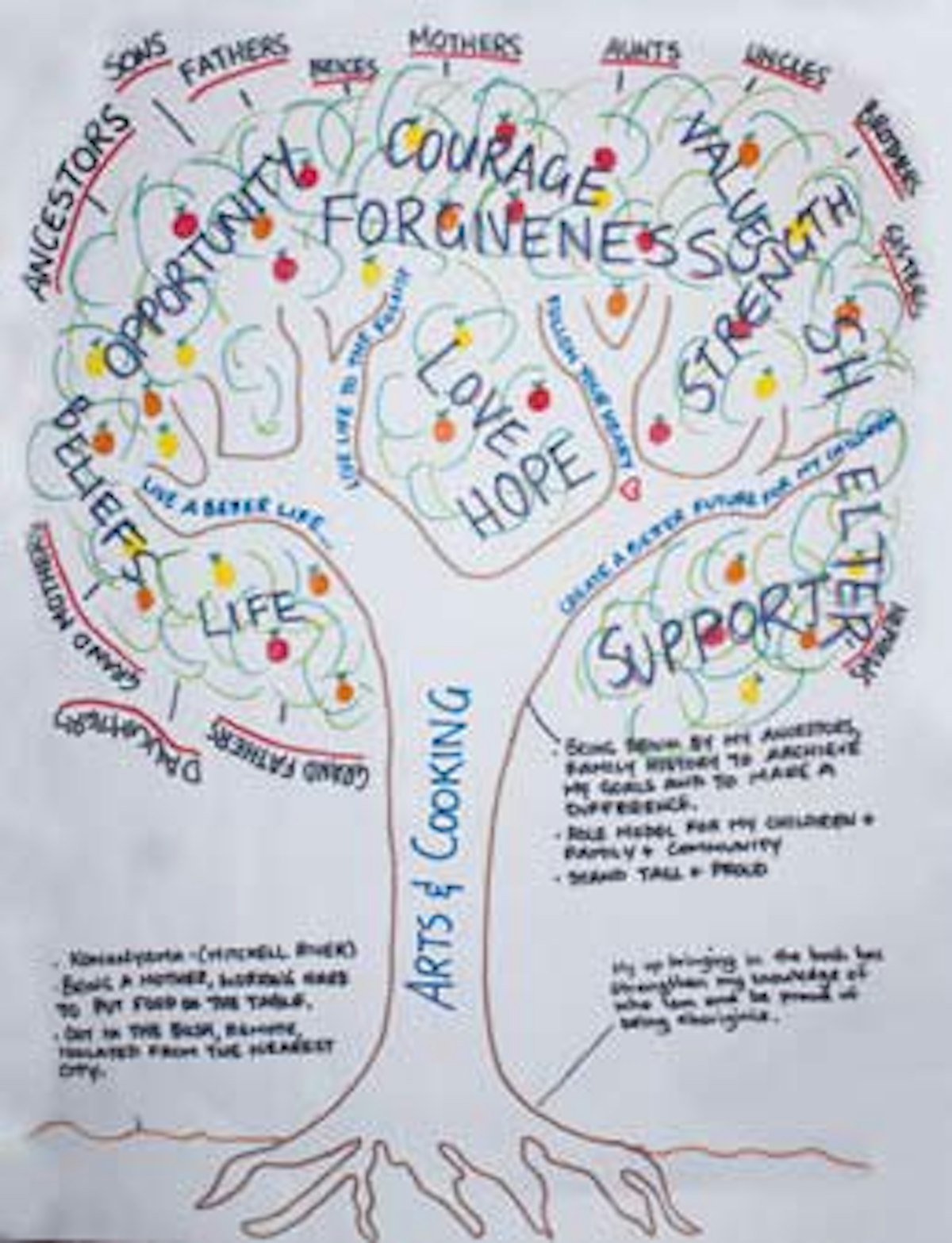
And of course, I would be remiss if I didn't include Ncazelo Ncube-Mlilo in these brief (and profoundly non-exhaustive) highlights of Black narrative practice. If you have even dipped your toes into narrative practice, you'll have heard of the Tree of Life Counselling Methodology, developed by Ncazelo Ncube-Mlilo and David Denborough in 2006, as an answer to the questions:
How can the lives of children who have experienced significant losses be responded to in ways that are not re-traumatising and that bring to light children’s own skills and knowledge?
What sorts of exercises can be used in camps for vulnerable children?
How can children be provided with significant experiences that do not separate them from their families, values and cultural norms?
The Tree of Life metaphor and practice has inspired hundreds of iterations adapted to contexts across the globe, and has been foundational in dignifying narrative practice with people who have experienced significant loss.
In addition to foundationally shifting the landscape of narrative practice, Ncube-Mlilo is also the founder and CEO of PHOLA, an organization dedicated to addressing the impacts of trauma on children, women, families, and communities across South Africa through culturally responsive care.
If you're more of a podcast person, you might like listening to this 2022 interview with The Systemic Way, where Ncube-Mlilo describes her COURRAGE collective narrative approach she developed with women who have experienced trauma.
I hope that this small selection inspires a deeper dive into the work of Black narrative practitioners. It was a treat to visit and revisit some of these works while I was writing this! If you have yet to encounter any or all of these names, I am so excited for you to take a closer look.
In solidarity,
Emily & The Groundfire Team